


While AI has caused a fair amount of disruption, Zoom is leveraging generative AI to remove friction throughout the workplace.
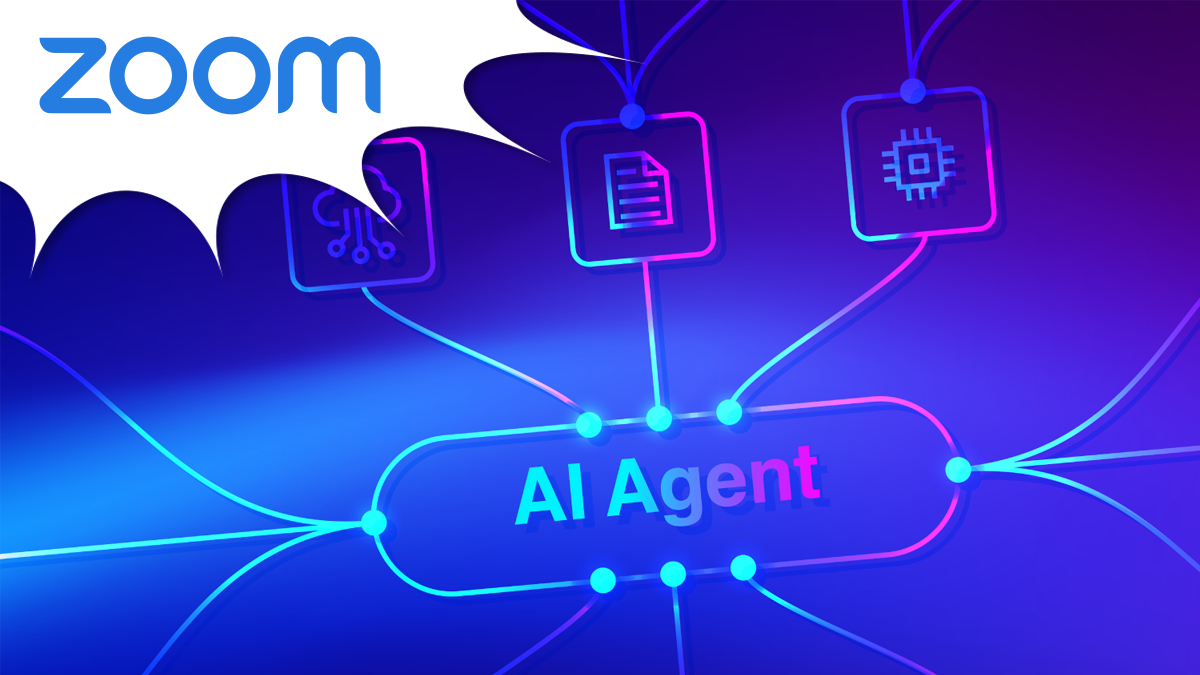
Zoom is evolving from a simple video meetings platform into a powerful system of insights and action by leveraging new agentic AI. Through the launch of AI Companion 3.0, Zoom seamlessly connects conversations to automated tasks, such as generating documents, scheduling, and updating third-party applications. Additionally, the AI-native Zoom Workplace suite instantly transforms meeting discussions into polished deliverables. Within customer service, Zoom’s enhanced AI agents retain user context to streamline resolutions and automate workflows.
Zoom is in an interesting place, a well-known business synonymous with video collaborations, and yet are not able to capture the majority of any market.
With that being said, the fact that the Zoom portfolio spans almost the entirety of the Unified Communications and Contact Centre works in their favour. To its credit, for a long time, Zoom has been an advocate for an open ecosystem when it comes to productivity tools and has been happy to work with direct competitors like Microsoft.
To that end, Zoom announced a raft of new AI products and integrations to solidify its importance, or inclusion, in the day-to-day workflows across the UC and CX industries. These innovations are aimed to help businesses and the end user deal with a “fragmented workplace”, according to Kimberly Storin, Chief Marketing & Communications Officer at Zoom.
“Employees spend an average of 25 hours per week in meeting-related activities, and 63% of that time is spent either before or after the meeting. That might be preparation, follow-up, trying to stay aligned, but ultimately, that’s $134 billion in lost productivity in the US alone every year. Our mission is to eliminate that friction, and we do it by connecting people’s workflows and intelligence with agentic AI. We’re evolving from a meetings platform into a system of insights and a system of action, one that helps teams move seamlessly from conversation to completion.”
More than a Meeting
It won’t come as a surprise to anybody in the UC industry that Zoom is intent on being seen as not just a communications company, and their latest AI innovations reflect that.
The overall strategy is to use agentic AI as a system of action to allow Zoom to evolve from a meetings tool to a system of insights and action that moves work from conversation to completion.
To get to completion, Zoom unveiled three core pillars of the artificial intelligence strategy. The first being ‘Uncover’, which deals with the insights from conversations, files, and applications. ‘Orchestrate’, which automates tasks, captures decisions, and drives next steps, and ‘Up Level’, which helps teams create, refine, and deliver qualitative work quicker.
A key reason why Zoom believes that this new approach will garner better results is the federated AI framework that sits across all of its solutions. Not to mention the open API, which means that any workplace app can integrate into the Zoom AI ecosystem.
A Better Companion
The primary way in which Zoom demonstrates its new capabilities is with AI Companion 3.0. Working across Zoom phone, chat, revenue accelerator, and integrated business apps, this companion connects every conversation directly into an action, whether it be summary action items, follow-up tasks, or generating documents and scheduling follow-up meetings.
The companion works across the Zoom customer experience stack, connecting with apps like Salesforce, Slack, and ServiceNow to create custom agents and multi-step workflows that reason and execute tasks such as updating CRMs, triggering tickets, and sending follow-ups to specific people.
Businesses can create custom AI agents too, using Zoom’s Agent Builder, which enables even the least tech-savvy to integrate AI to make their working life easier.
Zoom Workplace
Up to two years since Zoom launched its productivity suite. Initially thought to be an attempt to sway people away from the clutches of Office 365, Zoom has doubled down on Zoom Docs, Sheets, and Slides to make them AI-first.
Rather than have an assistant there for when a user feels like they need it, Zoom’s productivity applications will take what is said in a meeting and turn it into a specific document, sheet or slide, based on what is being said.
“With AI Docs, AI Sheets and AI Slides, we’re introducing a new generation of productivity apps,” said Leo Boulton, Head of Product, Solutions, & Industry Marketing, Zoom. “These aren’t traditional documents or spreadsheets with AI vaulted on; they are AI native canvases that understand the meetings and chat you have with colleagues, as well as the desired outcomes.
“Imagine finishing a meeting and being able to ask an AI companion to draft a project plan, budget, or presentation, based on the discussion that just took place. With an export option for your preferred format, you can easily share it as a PDF, Google Slides, or Microsoft PowerPoint. Every conversation can become a finished deliverable in minutes, not hours.”
On top of an improved suite of productivity applications, there are more improvements to the meeting experience, including My Notes, a cross-platform AI note-taking application, which jots down key points discussed throughout the meeting, as well as providing summaries and action items, based on what has been said in the meeting.
My Notes are the overhaul of the workplace user experience, which integrates artificial intelligence. Similar tools like Meeting Questions and Transcriptions inform an AI assistant, which can answer questions like “What’s the latest on this project?” and provide reminders and real-time meeting support around the clock. It is also able to detect who is responsible for each task based on voices within the meetings, as well as @mentions in chat.
This new chat function is an always-available teammate and can answer questions 24/7 to keep the project moving, and combat information overload with summaries of long threads, highlighting next steps, whilst making sure key messages are being seen by everybody.
Quick Resolutions
According to Michelle Couture, Head of Zoom Customer Experience Product Marketing, Zoom has embedded “agentic AI to unify service, sales and engagement workflows” across Zoom CX, Zoom Revenue Accelerator and Zoom Events.
By pulling information from across products, customers don’t have to give context or explain the reason for their calls to each siloed customer service chatbot or agent. “We carry the context forward with history and AI guidance and cross-system visibility, and when that context moves with the customer, intelligence can act on it.
“AI turns signals into action, reducing friction, eliminating repetition and ensuring every step drives towards completion. From intelligent-first contact to context-rich escalation, every interaction builds on the last.”
With the launch of Zoom Virtual Agent 3.0 (ZVA 3.0) earlier in the year, which understands voice, chat, images, and structured inputs, such as serial numbers or documents, to take actions within the Zoom suite of apps and even execute tasks in third-party applications. As the agent is built on a multi-modal LLM, ZVA 3.0 can also learn from actions human agents take in order to find a resolution in the future, and can interact over SMS now on top of Chatbots, social media, and in-applications.
For the human agents, Zoom AI Expert Assist simplifies the task of finding a resolution to a customer’s problem by guiding them through “a single, unified action path” as well as taking care of the next steps after the interaction, such as updating records, triggering workflows and automatically documenting outcomes.
A Better Experience
Outside of the contact centre, Zoom has introduced more tools, customisable tools for businesses to take advantage of, so that interacting is the last resort.
Customer Workflow Orchestration, CX Insights, and improvements to the Customer Engagement Pack bring a level of automation which allows businesses to trigger workflowsbased on interactions, know which engagements need more attention, and analyse what is happening across Zoom CX, and how to improve the overall experience.
Comment from UC Advanced Editor: Elliot Mulley-Goodbarne
Whilst I was listening to this webinar, it struck me that Zoom recognises that competing with Microsoft Teams one-on-one to provide video conferencing and communications is a futile endeavour. Unsurprisingly, given the imbalance between the size of the company and the market share that they hold in unified communications, the focus is on building the best interaction model for every section of the business. While it’s fantastic to see employees and customer service agents at the heart of innovations that are being brought to market, it’s inescapable that artificial intelligence is the one thing dominating every mind, every announcement, and every product at Zoom at the moment, as it looks to negate the impacts of a ubiquitous and openly available generative AI.