


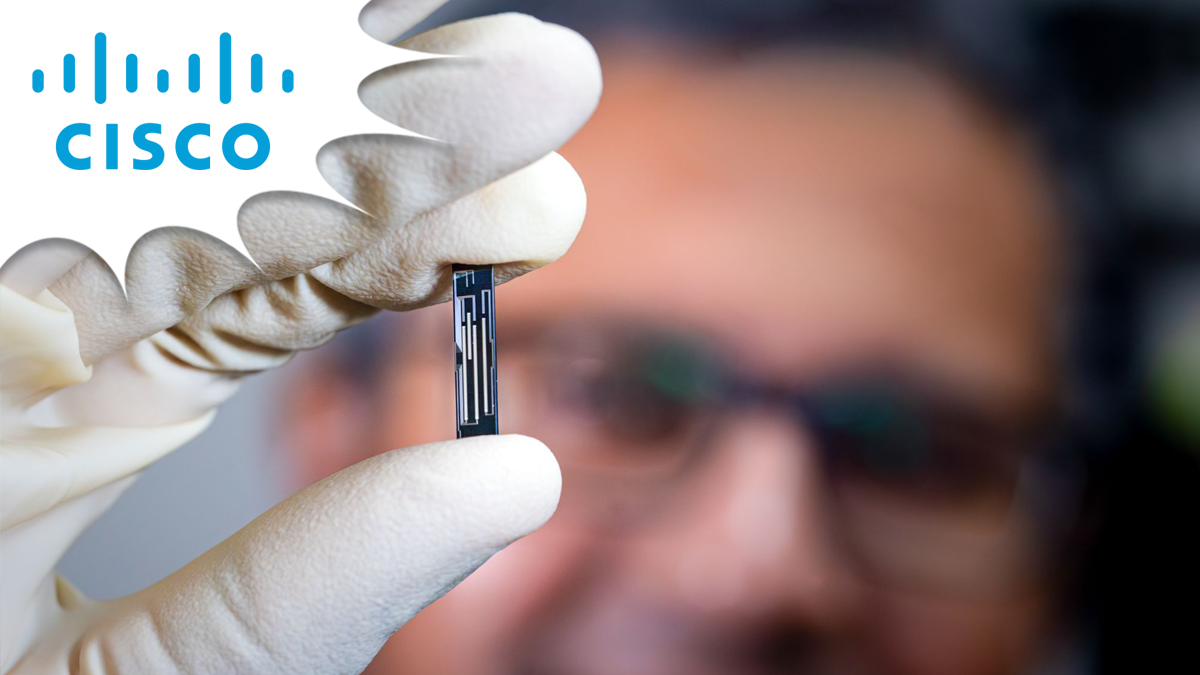
Vijoy Pandey, Senior Vice President and General Manager for Head of Outshift by Cisco, in a recent blog, has shared an update on the Cisco Universal Quantum Switch, currently in concept phase.
As Pandey puts it:
“Quantum computing is the future of computational power. It’s expected to transform how complex problems are solved in a wide range of industries, from drug discovery and financial modeling, to weather predictions, and cybersecurity.”
Making quantum computing accessible
Roadmaps from leading vendors project physical qubit counts reaching somewhere between 1,000 and low 10,000s within the next three years. However, solving high-value problems requires millions of qubits. The qubits globally needed far exceed the qubits we have.
Pandey continues:
“The answer is not just building bigger quantum computers, it’s also connecting them. A distributed approach, where many quantum processing units are unified through a quantum network, will help us get to useful quantum computing with added efficiency. This approach has been missing one critical piece of hardware. Until now.”
The missing piece in quantum networking
Cisco has announced the Cisco Universal Quantum Switch, a working research prototype that lets a user connect quantum computers from different vendors, along with quantum sensors of different types, into a single coherent network. It works by routing entangled photons while preserving their quantum state. It converts between all major quantum entanglement and encoding modalities, and it operates at room temperature, at telecom frequencies, on standard telecom fibre. No cryogenics or custom infrastructure is needed. Pandey explains:
“Imagine connecting billions of humans and tens of billions of machines with direct cables. That would not be scalable. The Internet materialised because we could connect tens of billions of endpoints through classical switches. The Cisco Universal Quantum Switch is the quantum equivalent.”
When two quantum computers built by different companies need to share quantum state, the switch accepts the incoming quantum signal in whatever modality it arrives. It then converts it internally to a neutral common modality for routing, and sends it out in the modality the receiving system expects. The Cisco Universal Quantum Switch never measures the quantum state.
What “universal” really means
The Cisco switch is universal and supports all major quantum encoding modalities, so users can connect quantum computers and quantum sensors of different types through one switch. The proof of concept validates the switching mechanism that makes it work, and the Cisco Universal Quantum Switch takes on four challenges that have been holding quantum networking back.
Challenge 1: Interconnect any quantum device efficiently while preserving quantum properties.
Point-to-point connections get unwieldy fast, and every one of those links has to preserve entanglement and encoding to be useful. Fully connecting a 1,000-node data center point-to-point would require roughly 500,000 direct links. A switching layer eliminates that complexity and keeps the delicate quantum states intact end-to-end, without requiring a physical fibre between every pair of devices.
Challenge 2: Modality conversion across entanglement and encoding.
Quantum systems mostly use four major encoding methods, polarisation, time-bin, frequency-bin, and path, and they use different entanglement schemes on top of those. The Cisco Universal Quantum Switch is designed to support all four modalities and dynamically converts between them, so systems with different physics-based architectures can communicate without changing how they work internally.
Challenge 3: Connect compute nodes and sensors of any type.
Modality conversion unlocks real heterogeneity for both quantum computers as well as quantum sensors. A neutral-atom QPU can talk to a trapped-ion QPU, which can in turn talk to a photonic or a neutral atom sensor through the same switch. Quantum data centers and quantum sensor networks built this way can evolve and integrate new technologies as they emerge, without being constrained by a single modality standard or architecture.
Challenge 4: Pool expensive resources across the network.
Components like single-photon detectors and entanglement sources can be expensive and unwieldy to deploy and manage. Without a switch, they get dedicated to individual point-to-point links, which means organisations are paying for hardware that sits idle most of the time while also multiplying operational complexity. The switch centralises resource pooling so one pool of detectors and sources serves the whole network. It makes large-scale quantum networks economically and operationally viable.
The Cisco Universal Quantum Switch requires:
- room-temperature operation which eliminates the need for cryogenic infrastructure, reducing complexity and cost.
- Standard telecom fibere which operates at telecom frequencies, leveraging existing fibre infrastructure that already carries internet traffic today.
- Minimal insertion penalty which introduces a performance average that is equal to or less than 4% loss, preserving entanglement quality during routing.
This research prototype is also enabling applications that can deliver value for classical use cases while the full quantum internet is still being built.
Quantum Alert is being developed to use entangled photon pairs to detect eavesdropping on existing fibre. An interception collapses the entanglement and triggers an alarm.
Quantum Sync is being explored as a way to enable correlated decision-making across distributed locations without the usual speed-of-light limits of classical message passing.
Both are research prototypes, for now.