



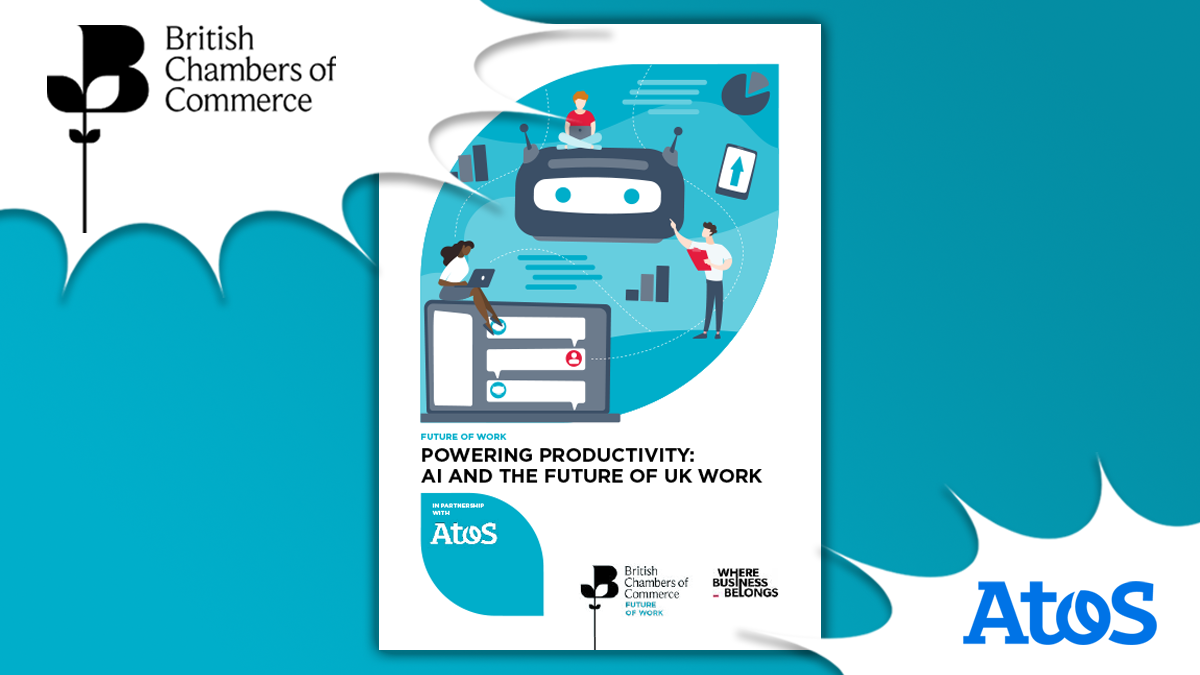
Key highlights from report:
- 95% of SMEs using AI report it has had no impact on workforce size over the year
- AI used to support rather than replace their workforce
- 54% of UK SME firms now using AI, up from 35% in 2025
- 86% of firms using AI say job roles have remained unchanged
- Adoption is uneven across sectors, with larger SMEs and professional services leading
- Firms already using AI report strong productivity gains
- Research raises questions for policymakers and businesses around skills, training and future job design
Good News for Employment Statistics in SMEs
The British Chambers of Commerce (BCC), in partnership with Atos, has published new research showing that 95% of SMEs using AI report it has had no impact on workforce size over the year, with most businesses using it to support rather than replace their workforce.
The groundbreaking research has been conducted by BCC Insights Unit with analysis from the University of Essex ESRC Research Centre on Micro-Social Change (MiSoC). A total of 668 businesses took part in the online research with the fieldwork being carried out between 12 January and 6 February 2026. 94% of respondents were SMEs (fewer than 250 staff). 31% of those taking part were classified as manufacturers and 69% were in the services sector.
A major jump in AI Adoption
According to the report, more than half of UK SME firms (54%) are now actively using AI, showing a major jump in tech adoption. Previous BCC research found that 35% of firms were using AI in 2025, up from 25% in 2024 and 23% in 2023.
The fresh research shows most firms (86%) say job roles have remained unchanged. The report shows:
- AI adoption has accelerated but is uneven across sectors: Larger SMEs and B2B professional services firms lead AI adoption, while smaller firms and consumer-facing and manufacturing sectors are slower to adopt.
- Most firms using AI say it has had no impact on headcount: Most SMEs say AI is currently being used to support employees rather than replace them
- Generic AI vs Bespoke AI users: A smaller group of SMEs (one in ten) are adopting deeper bespoke AI and are more likely to expect headcount reductions than generic users. Likewise, 14% of SMEs investing in AI training anticipate headcount reductions over the next 12 months, suggesting that advanced AI adoption may drive broader restructuring.
- Productivity gains tied to adoption maturity: SMEs already using AI report strong net productivity improvement expectations (+71pp), while firms planning to adopt or unsure show far lower optimism.
Harness the Benefits but Consider the Future
The report concludes that the challenge ahead for UK businesses will be to harness the enormous benefits in productivity AI offers, while futureproofing education and careers. It provides several recommendations for the Government and businesses to ensure AI is used responsibly and effectively across the labour market, including calls to:
- Establish an AI Labour Market Observatory to monitor the ongoing impact of AI on jobs.
- Establish a network of AI champions to help SMEs adopt AI.
- Allocate Growth and Skills Levy funds to subsidize AI literacy training.
- Introduce tax credits or grants to encourage business investment in AI technologies and workforce training.
- Lead national efforts to integrate AI literacy across education and lifelong learning, partnering with businesses and local authorities.
The BCC is already supporting businesses to adopt AI. The BCC AI Academy, launched in October 2025, is helping firms across the Chamber network embrace the new technology.
Patrick Milnes, Head of Policy: People and Work at the British Chambers of Commerce said:
“Our research shows AI has rapidly moved from the margins of business to the mainstream. Businesses are reaping the productivity benefits. For many SMEs, AI is helping them work smarter, improve decision making and freeing up staff to focus on high value tasks. To future proof both firms and their workforces, government must work closely with business to get AI policy right. That’s about working together to build AI skills, support adoption and closely track the impact technology is having on workforces. With the right support in place, AI can be a powerful driver of growth, productivity and opportunity across the UK economy.”
Atos: “Put People at the Heart of AI Change”
Michael Herron, Head of Atos UK and Ireland, has said:
“AI has great potential to benefit the productivity and wealth of our country, but it will also have a fundamental impact on the workforce. We must ensure that its use and adoption is to the advantage of both society and the economy, which can be achieved by putting people at the heart of AI-related change. At Atos, we’re already doing this through our pioneering approach to AI career paths for graduates and apprentices, plotting their progression through our company in the knowledge that entry-level technology roles have changed and need to be redesigned; some roles will disappear, but many others will be created.”
Herron continues: “It’s the job of all political and industry leaders to help our workforce to embrace the new AI-age. To build a strong future with robust employment opportunities, we must be innovative with our thinking, work together to share our knowledge and experience, invest in training and skills and develop strategies for how we can reshape the workforce.”
The UK Department for Science, Innovation and Technology Minister for AI Kanishka Narayan MP has said:
“More and more firms across the UK are putting AI to work, and it’s great to see businesses embracing the opportunities this technology can create. We already have one of the world’s strongest AI ecosystems, and the next step is making sure companies of every size feel confident using it day to day. We have recently set up a cross-government Future of Work Unit to closely monitor the impact of AI on jobs, and we’re helping 10 million people build practical AI skills – so businesses can work smarter, stay competitive and make sure the benefits of AI are felt right across the economy.”
A link to the report can be found here: https://www.britishchambers.org.uk/wp-content/uploads/2026/03/Powering-Productivity-AI-and-the-Future-of-UK-Work_FINAL.pdf